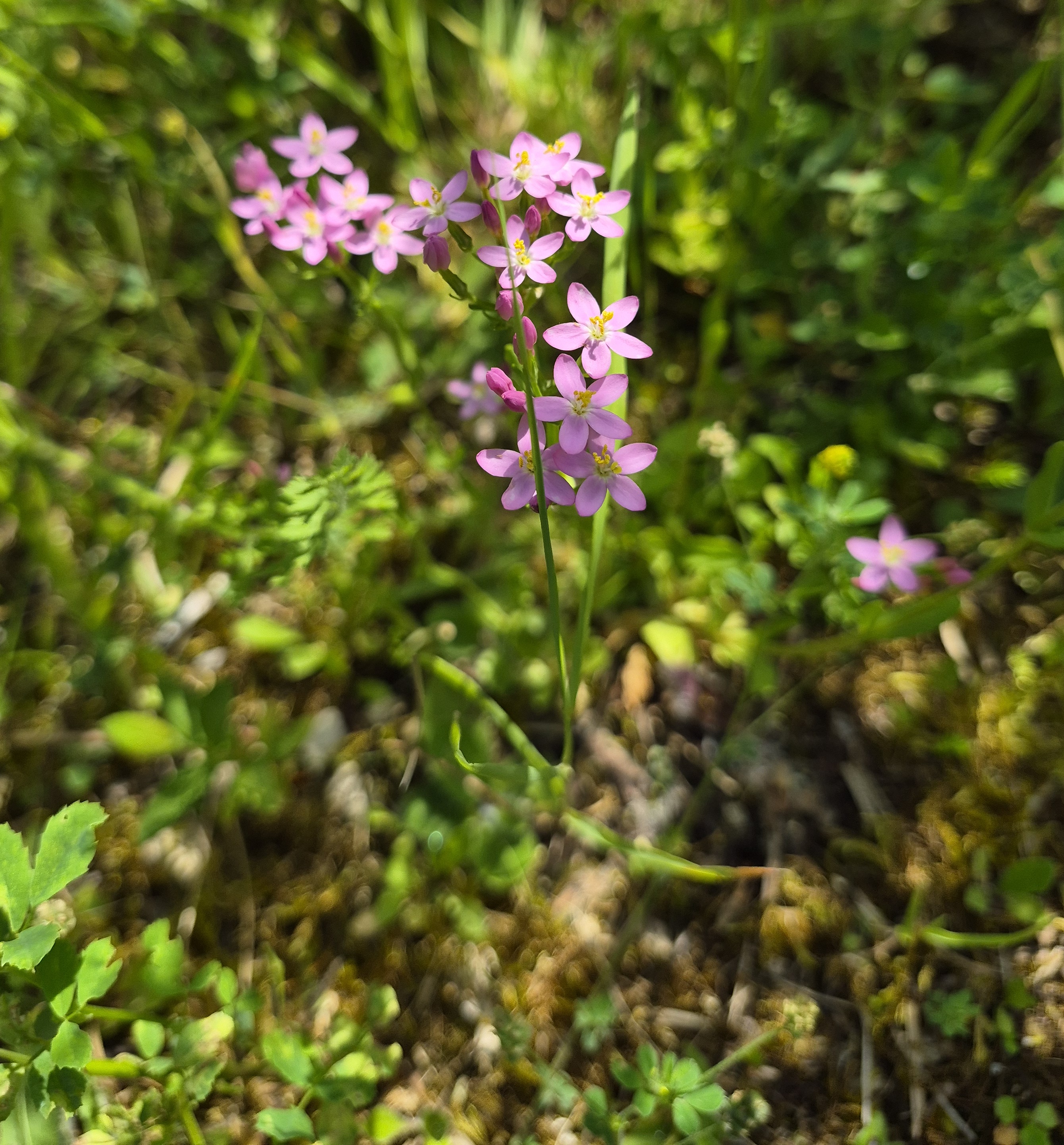
Flower Properties
| Property | Value |
|---|---|
| English Name | Common Centaury |
| Scientific Name | Centaurium erythraea |
| MainColor | Pink |
| PlantType |  Herb Herb |
| Distribution |  Cultivated Cultivated |
| Season Found | June (Jun - Sep) |
| ImageUrl | Centaurium-001 |
| Photographer | DP |
| Location Found | Ragpits |
| Country Found | UK |
| Last Updated | 12 September 2026 |
| Photo Quality | A |
Flower Details
Description
Common Centaury is a biennial herb with a slender, erect stem that can grow up to 50 cm tall. It features small, pink star-shaped flowers that bloom from June to September. The leaves are opposite and lanceolate, forming a basal rosette in the first year.
Distribution
This species is native to Europe but can also be found in parts of North Africa and western Asia. It thrives in grasslands, heathlands, and open woodlands, often in calcareous soils.
Medicinal/Other Uses

✅ Traditionally used in herbal medicine for its digestive and liver-supporting properties. It is also known for its use as a bittering agent in liqueurs.
Edibility

Caution Advised - the plant is bitter and not typically consumed as food, but it is used in small amounts for medicinal purposes.
Human Toxicity
Non_ToxicNon Toxic - generally considered safe in small quantities, though excessive consumption may lead to digestive upset due to its bitterness.
Pet Toxicity

Non Toxic - no known harmful effects on pets.
Active Compounds
Gentiopicrin, swertiamarin, erythrocentaurin.