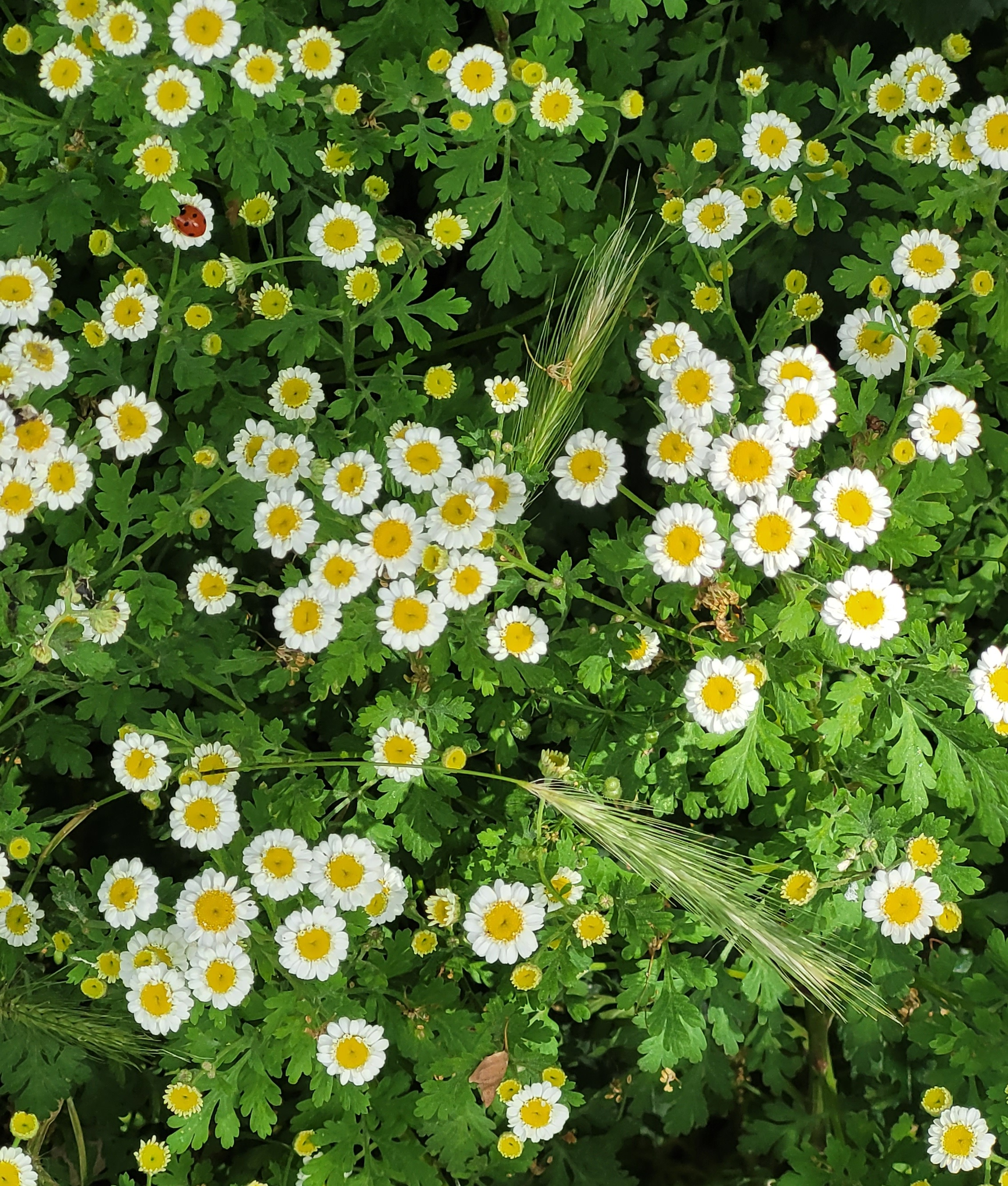
Flower Properties
| Property | Value |
|---|---|
| English Name | Feverfew |
| Scientific Name | Tanacetum parthenium |
| Main Color | White |
| Plant Type |  Herb |
| Distribution |  Cultivated |
| Flowering | Jun - Oct |
| Image | Tanacetum-003 |
| Photographer | DP |
| Location Found | Watford |
| Country Found | UK |
Flower Details
Description
Feverfew is a bushy perennial herb with small, daisy-like flowers and aromatic, pinnate leaves. It typically grows to about 60 cm tall and is known for its bright green foliage and clusters of white flowers with yellow centres.
Distribution
Native to southeastern Europe, feverfew is now widespread across Europe, North America, and Australia, often found in gardens and along roadsides.
Medicinal/Other Uses

✅ Feverfew has been traditionally used for its anti-inflammatory properties and is commonly used to prevent migraines and treat arthritis.
Edibility

Caution Advised - leaves are bitter and can cause mouth ulcers if consumed in large quantities.
Human Toxicity

Mildly_Toxic
Mildly Toxic - can cause skin irritation and mouth ulcers; ingestion of large amounts may lead to stomach upset.
Pet Toxicity

Mildly Toxic to dogs and cats - ingestion can cause vomiting and diarrhoea.
Active Compounds
Parthenolide, camphor, luteolin.