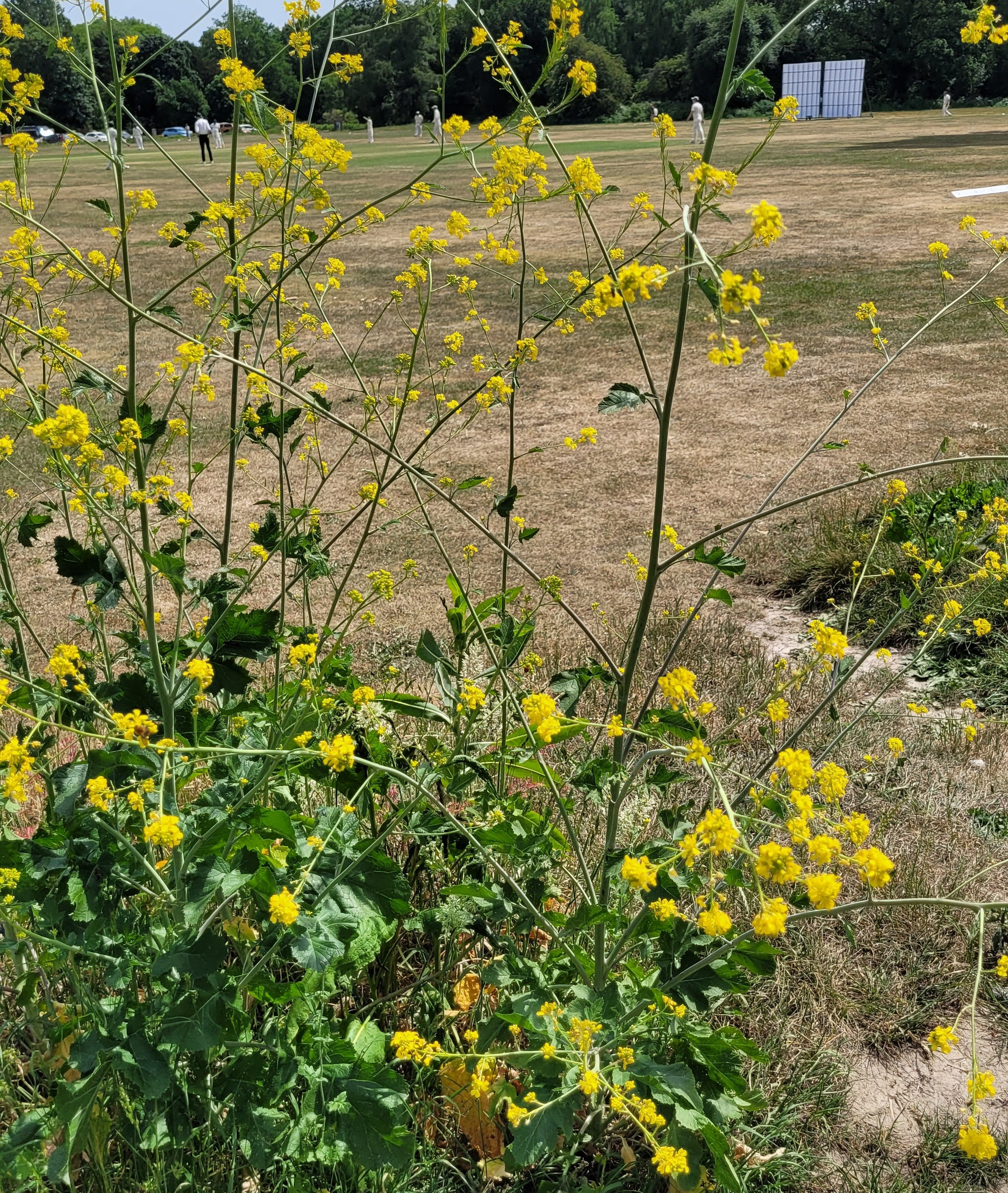
Flower Properties
| Property | Value |
|---|---|
| English Name | Black Mustard |
| Scientific Name | Brassica nigra |
| MainColor | Yellow |
| PlantType |  Herb Herb |
| Distribution |  Native Native |
| Season Found | May (May - Sep) |
| ImageUrl | Brassica-002 |
| Photographer | DP |
| Location Found | Chorleywood |
| Country Found | UK |
| Last Updated | 12 September 2026 |
| Photo Quality | A |
Flower Details
Description
Black Mustard is an annual plant that can grow up to 2 metres tall, with bright yellow flowers arranged in clusters. The leaves are dark green and lobed, and the plant produces small, round seeds that are black or dark brown. It thrives in temperate regions and is often found in fields and along roadsides.
Distribution
Native to the Mediterranean region, Black Mustard is now widespread across Europe, Asia, and North America, often found in disturbed soils and agricultural areas.
Medicinal/Other Uses

✅ Traditionally used in herbal medicine, Black Mustard seeds are employed for their stimulant and diaphoretic properties.
Edibility

Edible - seeds are commonly used as a spice in cooking, and young leaves can be eaten raw or cooked.
Human Toxicity

Mildly_Toxic
Mildly Toxic - consumption of large quantities of seeds can cause gastrointestinal irritation.
Pet Toxicity

Mildly Toxic to dogs and cats - ingestion may lead to mild gastrointestinal upset.
Active Compounds
Sinigrin, myrosinase, isothiocyanates.