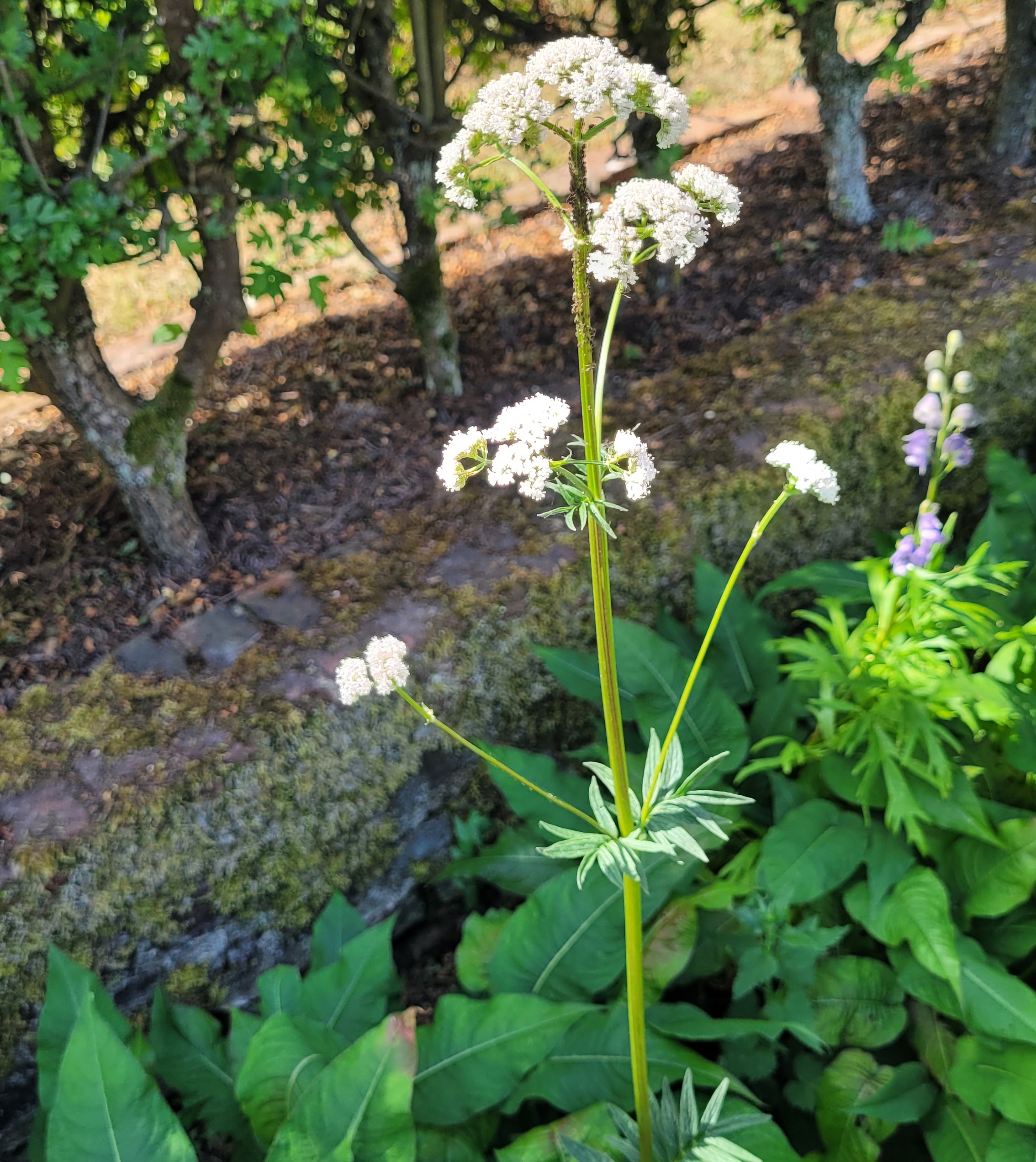
Flower Properties
| Property | Value |
|---|---|
| English Name | Valerian |
| Scientific Name | Valeriana officinalis |
| MainColor | Pink |
| PlantType |  Herb Herb |
| Distribution |  Cultivated Cultivated |
| Season Found | May (Jun - Aug) |
| ImageUrl | Valeriana-001 |
| Photographer | DP |
| Location Found | Hatfield House |
| Country Found | UK |
| Last Updated | 12 September 2026 |
| Photo Quality | A |
Flower Details
Description
Valerian is a perennial flowering plant with sweetly scented pink or white flowers. It typically grows up to 1.5 metres tall and is known for its feathery leaves and hollow stems.
Distribution
Native to Europe and parts of Asia, it has been introduced to North America. It commonly grows in grasslands and along roadsides.
Medicinal/Other Uses

✅ Valerian root is widely used as a herbal remedy for insomnia and anxiety due to its sedative properties. It has been used since ancient times for its calming effects.
Edibility

Caution Advised - while the root is used medicinally, it is not typically consumed as food due to its strong odour and taste.
Human Toxicity

Mildly_Toxic
Mildly Toxic - excessive consumption can lead to headaches, dizziness, and stomach upset.
Pet Toxicity

Mildly Toxic to cats and dogs - ingestion may cause gastrointestinal upset and sedation.
Active Compounds
Valerenic acid, valepotriates, isovaleric acid.