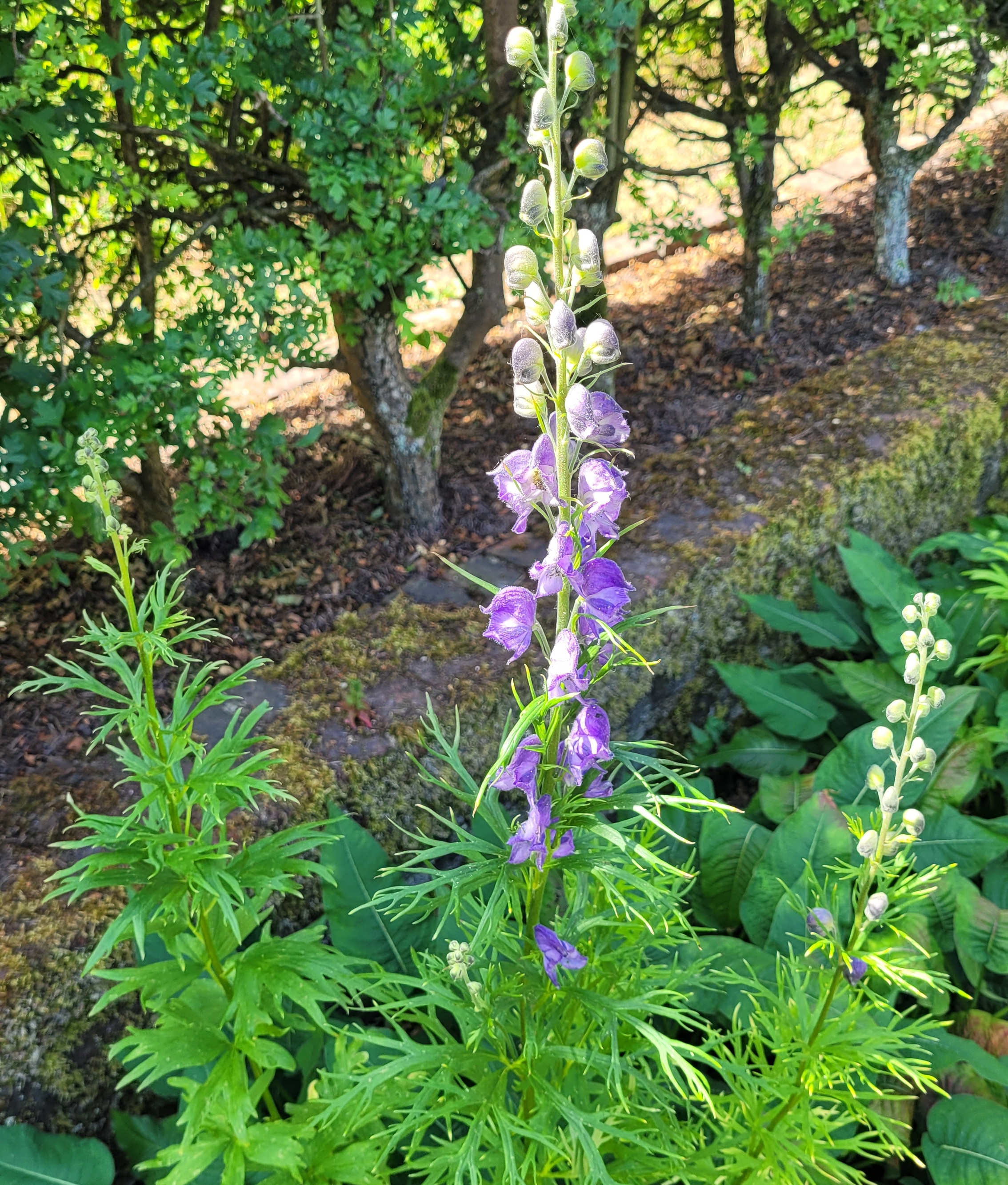
Flower Properties
| Property | Value |
|---|---|
| English Name | Monk's Hood |
| Scientific Name | Aconitum napellus |
| MainColor | Blue |
| PlantType |  Herb Herb |
| Distribution |  Cultivated Cultivated |
| Season Found | May (Jun - Sep) |
| ImageUrl | Aconitum-001 |
| Photographer | DP |
| Location Found | Hatfield House |
| Country Found | UK |
| Last Updated | 12 September 2026 |
| Photo Quality | A |
Flower Details
Description
Aconitum napellus is a perennial plant with tall, erect stems that can reach up to 1.5 metres in height. It features dark green leaves and striking hooded blue to purple flowers, which resemble a monk's cowl. The plant blooms from late spring to early summer and is often found in moist, mountainous areas.
Distribution
Native to Europe, Aconitum napellus is commonly found in the mountainous regions of western and central Europe. It has also been introduced to gardens in North America and other temperate regions.
Medicinal/Other Uses

✅ Historically used in traditional medicine for its analgesic and anti-inflammatory properties, though it is highly toxic and not recommended for use.
Edibility
Inedible - all parts of the plant contain potent toxins and should not be consumed.
Human Toxicity

Highly_Toxic
Highly Toxic - ingestion or skin contact can cause severe symptoms including nausea, vomiting, and heart arrhythmias, potentially leading to death.
Pet Toxicity

Highly Toxic to dogs and cats - ingestion can result in severe gastrointestinal distress, neurological symptoms, and can be fatal.
Active Compounds
Aconitine, mesaconitine, hypaconitine