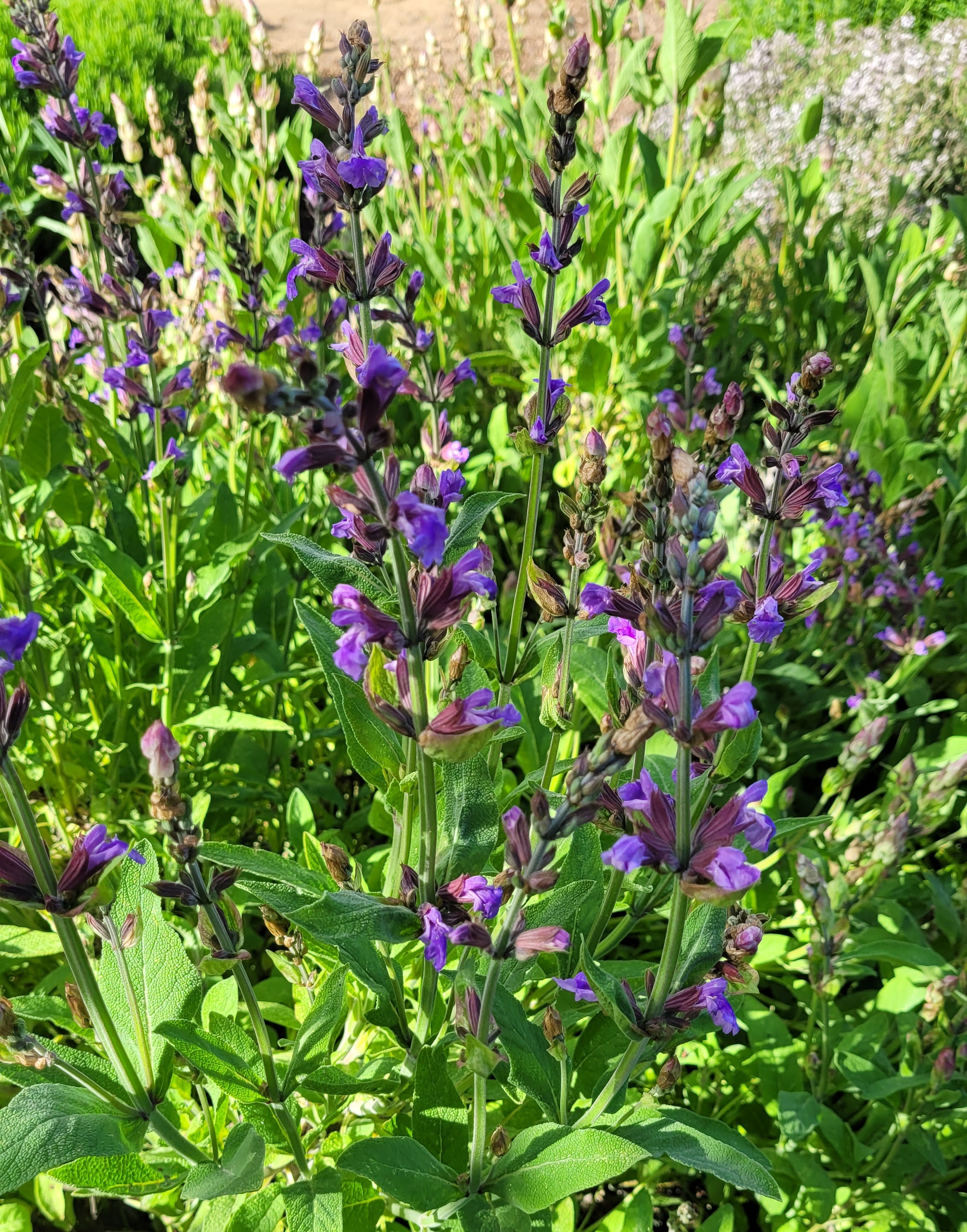
Flower Properties
| Property | Value |
|---|---|
| English Name | Common Sage |
| Scientific Name | Salvia officinalis |
| MainColor | Purple |
| PlantType |  Herb Herb |
| Distribution |  Cultivated Cultivated |
| Season Found | May (May - Jul) |
| ImageUrl | Salvia-011 |
| Photographer | DP |
| Location Found | Bedmond |
| Country Found | UK |
| Last Updated | 11 September 2026 |
| Photo Quality | A |
Flower Details
Description
Common Sage is a perennial, evergreen subshrub with woody stems, greyish leaves, and blue to purplish flowers. It is known for its strong aroma and slightly bitter taste. The leaves are oblong and covered in fine hairs, giving them a soft texture.
Distribution
Native to the Mediterranean region, Common Sage is now widely cultivated around the world, especially in temperate regions. It thrives in well-drained soils and full sun.
Medicinal/Other Uses

✅ Traditionally used for its antiseptic and anti-inflammatory properties, Common Sage has been employed in herbal remedies for sore throats and digestive issues. It is also used as a culinary herb to flavour meats and sauces.
Edibility

Edible - commonly used as a culinary herb, particularly in Mediterranean dishes.
Human Toxicity

Mildly_Toxic
Mildly Toxic - ingestion of large quantities can lead to symptoms such as dizziness, rapid heartbeat, and seizures due to thujone.
Pet Toxicity

Mildly Toxic to dogs and cats - ingestion can cause gastrointestinal upset and central nervous system depression.
Active Compounds
Thujone, camphor, cineole