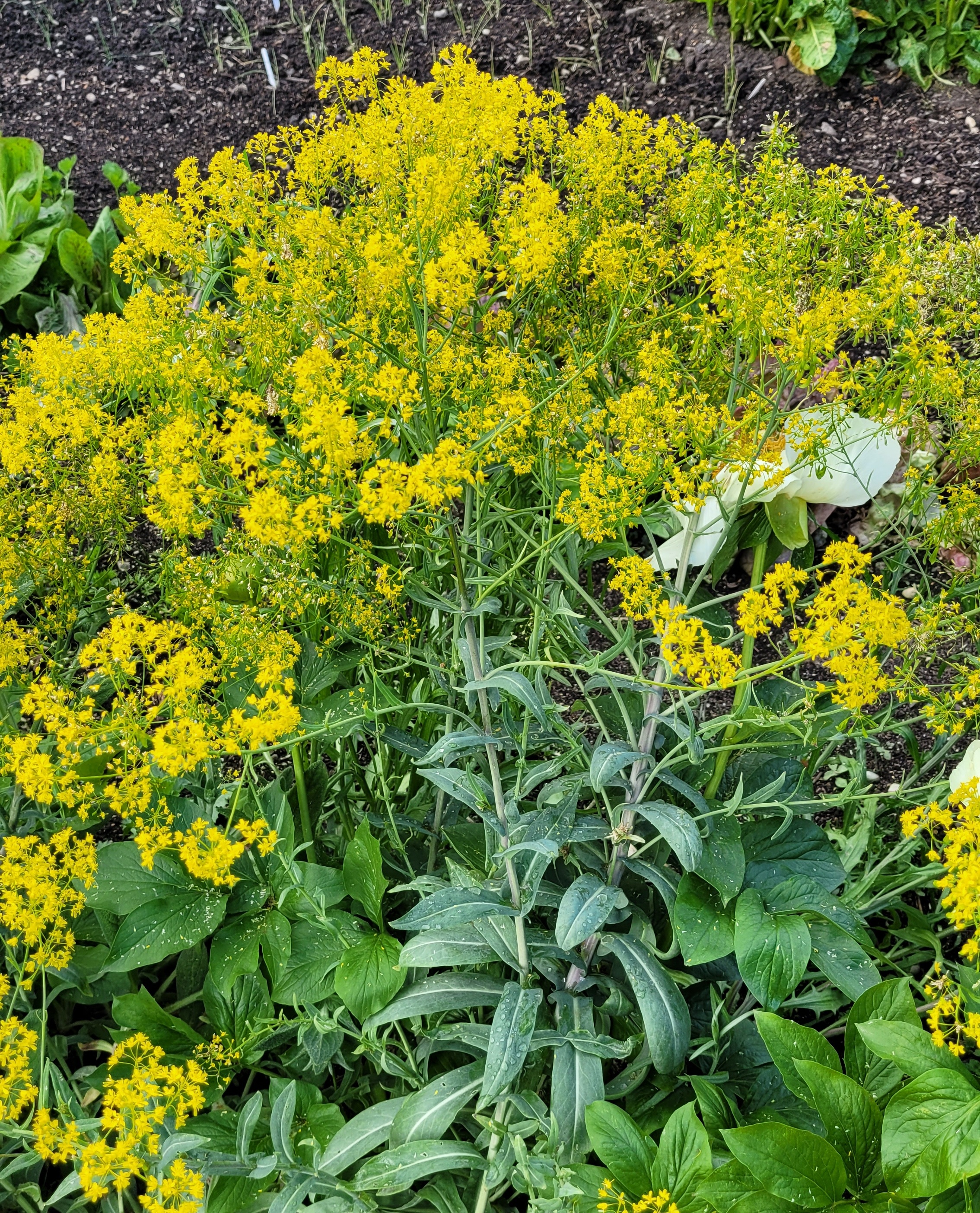
Flower Properties
| Property | Value |
|---|---|
| English Name | Dyer's Woad |
| Also Known As | Woad |
| Scientific Name | Isatis tinctoria |
| MainColor | Yellow |
| PlantType |  Herb Herb |
| Distribution |  Cultivated Cultivated |
| Season Found | May (May - Jul) |
| ImageUrl | Isatis-001 |
| Photographer | DP |
| Location Found | Bedmond |
| Country Found | UK |
| Last Updated | 11 September 2026 |
| Photo Quality | A |
Flower Details
Description
Woad is a biennial plant with rosettes of lance-shaped leaves and tall flowering stems that bear clusters of small yellow flowers. The plant can grow up to 1.5 metres in height and is known for its distinctive blue dye extracted from its leaves.
Distribution
Native to southeastern Europe and western Asia, woad has been naturalised in many parts of Europe and North America. It typically grows in sunny, well-drained soils and is often found in disturbed areas.
Medicinal/Other Uses

✅ Historically used as a source of blue dye, woad has also been used in traditional medicine for its purported anti-inflammatory properties.
Edibility
Inedible - the plant is not considered suitable for human consumption.
Human Toxicity
Non_ToxicNon Toxic - no significant toxic effects reported in humans.
Pet Toxicity

Non Toxic - no known toxicity to pets.
Active Compounds
Indican, isatan B, isatin.