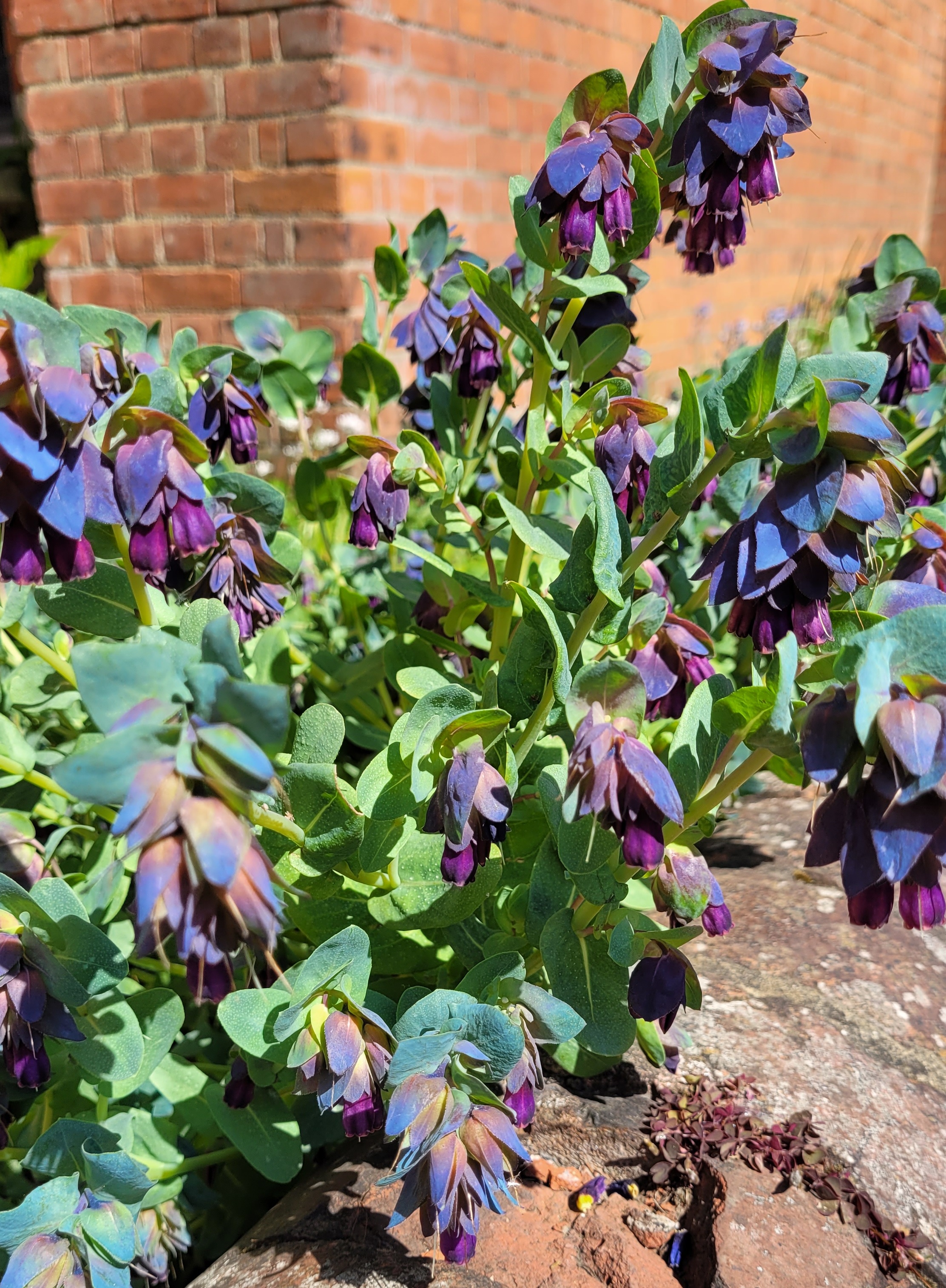
Flower Properties
| Property | Value |
|---|---|
| English Name | Honeywort |
| MainColor | Violet |
| PlantType |  Shrub Shrub |
| Growth Type |  Cultivated Cultivated |
| Season | May |
| ImageUrl | Cerinthe-001 |
| Photographer | DP |
| Location | |
| Human Toxicity | Non_Toxic |
Flower Details
Description
An annual or short-lived perennial with striking blue-green leaves and nodding clusters of tubular, purple-blue flowers. It is highly attractive to bees and other pollinators, making it a popular choice for wildlife gardens.
Distribution
Native to the Mediterranean region. In the UK, it is primarily cultivated but may occasionally self-seed in gardens.
Medicinal/Other Uses
Historically, related species were used in traditional remedies, but C. major is now grown mainly for ornamental and wildlife purposes.
Edibility
Not edible – grown purely for its visual and ecological value.
Human Toxicity
Generally non-toxic to humans or pets, though large ingestion could cause mild stomach upset.
Pet Toxicity
Not Toxic
Active Compounds
Flavonoids, alkaloids (in small amounts).