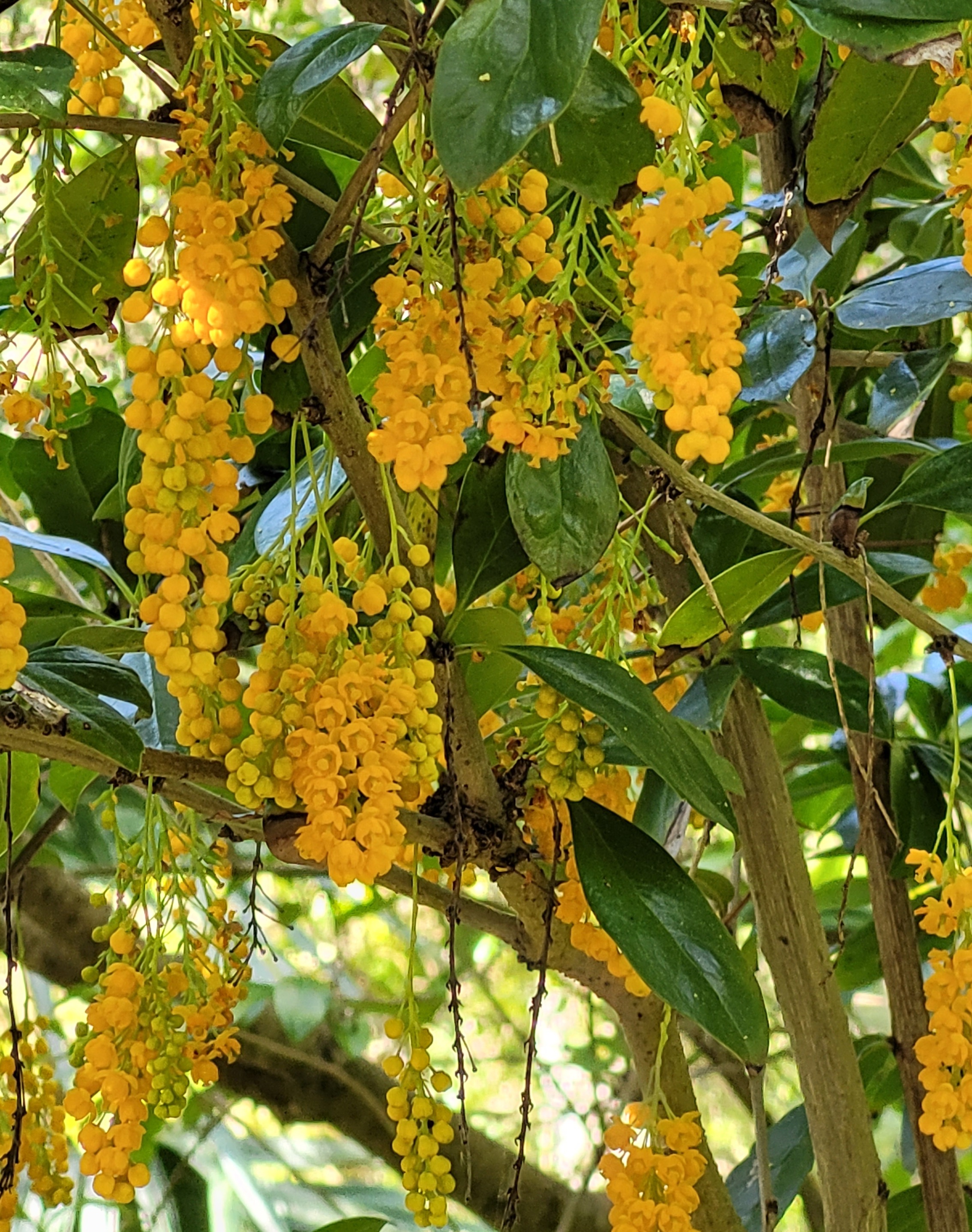
Flower Properties
| Property | Value |
|---|---|
| English Name | Common Barberry |
| Scientific Name | Berberis vulgaris |
| MainColor | Yellow |
| PlantType |  Shrub Shrub |
| Distribution |  Cultivated Cultivated |
| Season Found | April (May - Jun) |
| ImageUrl | Berberis-008 |
| Photographer | DP |
| Location Found | Abbotsbury |
| Country Found | UK |
| Last Updated | 10 September 2026 |
| Photo Quality | A |
Flower Details
Description
Barberry is a deciduous shrub with thorny branches, small oval leaves, and bright yellow flowers. It produces oblong red berries that are often seen in clusters. The shrub can grow up to 4 metres tall and is known for its vibrant autumn foliage.
Distribution
Native to central and southern Europe, it has spread to parts of North America and Asia. It thrives in hedgerows, woodlands, and scrublands.
Medicinal/Other Uses

✅ Barberry has been used traditionally for its antimicrobial and anti-inflammatory properties. It has been employed in treating digestive disorders, skin conditions, and infections.
Edibility

Caution Advised - berries are edible but sour, and should be consumed in moderation.
Human Toxicity

Mildly_Toxic
Mildly Toxic - ingestion of large quantities of roots or bark may cause nausea and vomiting.
Pet Toxicity

Mildly Toxic to dogs and cats - ingestion can lead to gastrointestinal upset.
Active Compounds
Berberine, berbamine, oxyacanthine