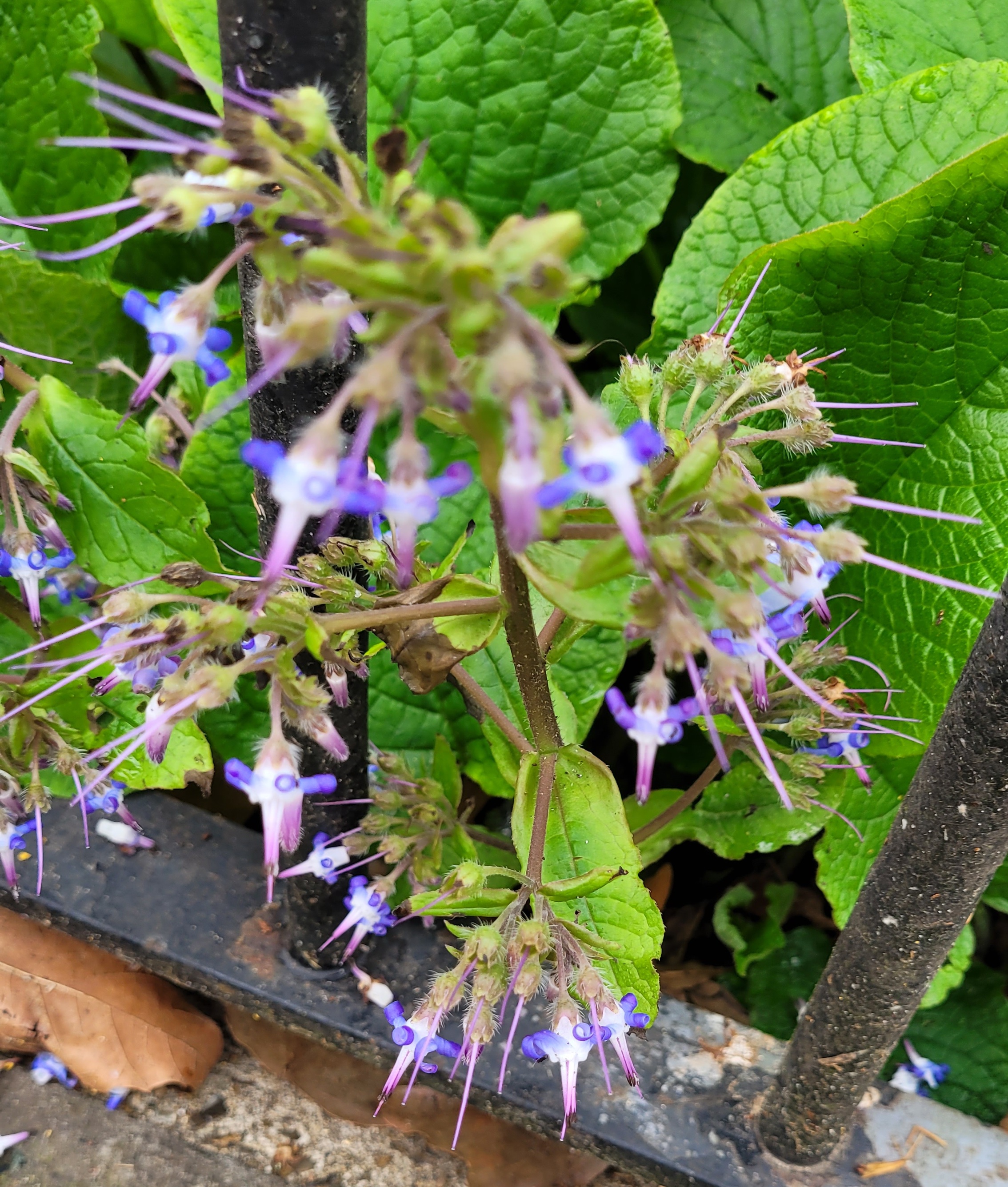
Flower Properties
| Property | Value |
|---|---|
| English Name | Common Borage |
| MainColor | Blue |
| PlantType |  Herb Herb |
| Growth Type |  Cultivated Cultivated |
| Season | March |
| ImageUrl | Borago-001 |
| Photographer | DP |
| Location | Angel |
| Human Toxicity |  Mildly_Toxic Mildly_Toxic |
Flower Details
Description
Borage is an annual herb with star-shaped blue flowers and hairy leaves. It typically grows up to 60 cm tall and is known for its cucumber-like flavour. The plant is often cultivated in gardens for its ornamental flowers and as a companion plant.
Distribution
Native to the Mediterranean region, borage is now widely naturalised across Europe, North America, and other temperate regions.
Medicinal/Other Uses

✅ Borage has been used traditionally for its anti-inflammatory properties and to treat skin conditions. It is also used in herbal medicine to support adrenal function and reduce stress.
Edibility

Edible - young leaves and flowers can be eaten raw or cooked, often used in salads and as a garnish.
Human Toxicity
Mildly Toxic - contains pyrrolizidine alkaloids which can be harmful to the liver if consumed in large quantities over time.
Pet Toxicity

Mildly Toxic to dogs and cats - ingestion may cause mild gastrointestinal upset.
Active Compounds
Gamma-linolenic acid, mucilage, tannins