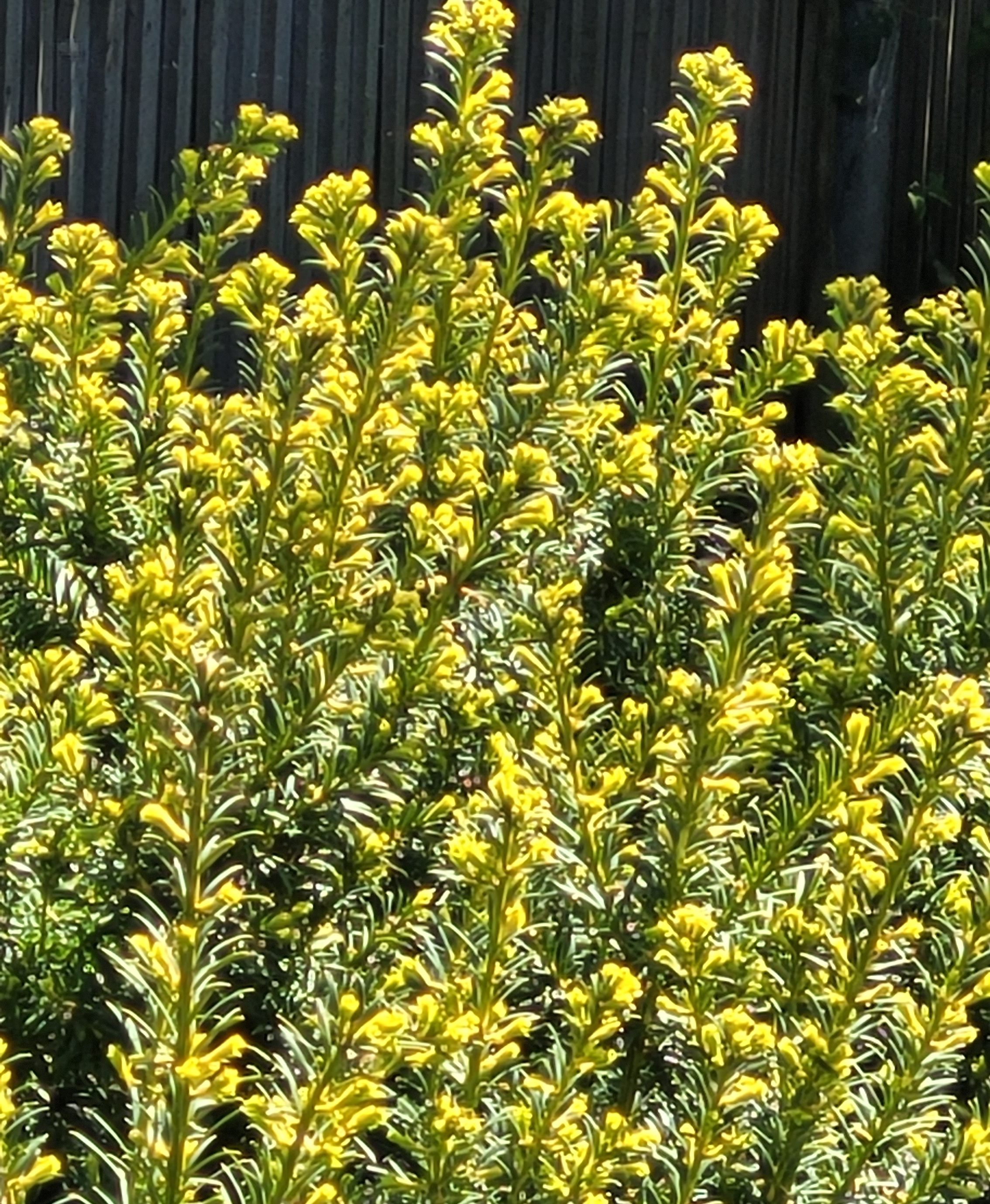
Flower Properties
| Property | Value |
|---|---|
| English Name | Common Yew |
| Scientific Name | Taxus baccata |
| MainColor | Yellow |
| PlantType |  Tree Tree |
| Distribution |  Native Native |
| Season Found | March (Feb - Apr) |
| ImageUrl | Taxus-002 |
| Photographer | DP |
| Location Found | Abbots Langley |
| Country Found | UK |
| Last Updated | 09 September 2026 |
| Photo Quality | B |
Flower Details
Description
Yew is a slow-growing, evergreen tree with dark green, needle-like leaves. It produces bright red, berry-like arils that are highly distinctive. The bark is reddish-brown and peels in thin flakes.
Distribution
Yew trees are native to Europe, northwest Africa, and southwest Asia. They are commonly found in well-drained soils and are often seen in churchyards and gardens across the UK.
Medicinal/Other Uses

✅ The yew tree has been used in traditional medicine and is a source of the anti-cancer drug, paclitaxel (Taxol).
Edibility
Inedible - The seeds and leaves contain toxic compounds and should not be consumed.
Human Toxicity
Highly_Toxic
Highly Toxic - All parts of the yew, except the aril, contain toxic alkaloids that can cause serious poisoning and potentially death if ingested.
Pet Toxicity

Highly Toxic to dogs and cats - Ingestion can lead to severe gastrointestinal distress, cardiac issues, and can be fatal.
Active Compounds
Taxine, paclitaxel, baccatin.