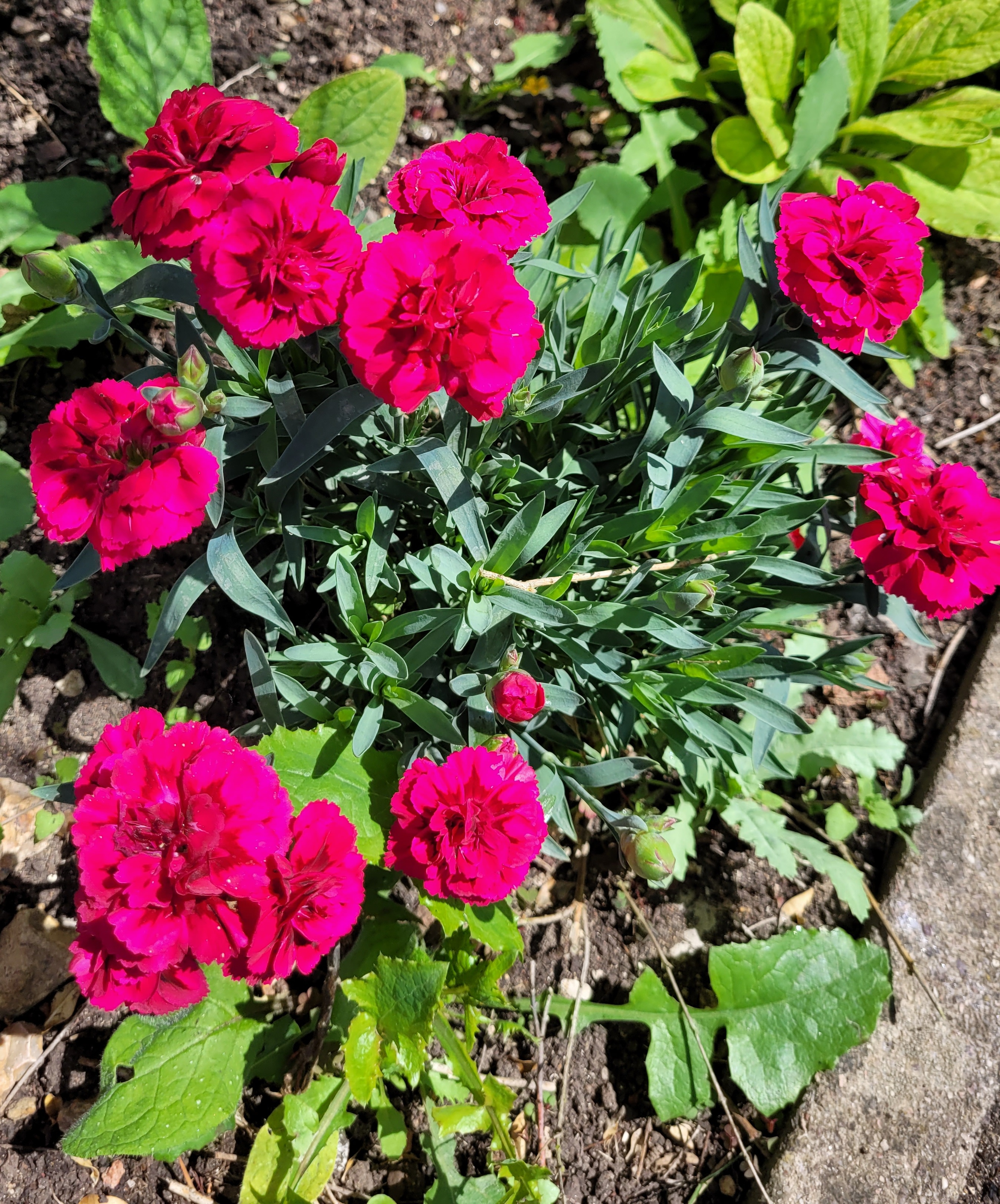
Flower Properties
| Property | Value |
|---|---|
| English Name | Carnation |
| Scientific Name | Dianthus caryophyllus |
| MainColor | Red |
| PlantType |  Herb Herb |
| Distribution |  Cultivated Cultivated |
| Season Found | June (Jun - Sep) |
| ImageUrl | Dianthus-003 |
| Photographer | DP |
| Location Found | Abbots Langley |
| Country Found | UK |
| Last Updated | 08 September 2026 |
| Photo Quality | A |
Flower Details
Description
Carnations are herbaceous perennials known for their frilled, fragrant flowers, which come in a variety of colours including pink, white, and red. They typically grow to a height of 60–90 cm and have narrow, bluish-green leaves.
Distribution
Native to the Mediterranean region, carnations are now cultivated worldwide, particularly in Europe and the Americas, for ornamental purposes.
Medicinal/Other Uses

✅ Carnations have been used in traditional medicine for their anti-inflammatory properties and are also used in perfumery.
Edibility
Edible - petals can be used in salads and as garnishes, but the bitter white base should be removed.
Human Toxicity
Non_ToxicNon Toxic - generally considered safe for humans, though some may experience mild allergic reactions.
Pet Toxicity

Mildly Toxic to cats and dogs - ingestion may cause mild gastrointestinal upset.
Active Compounds
Eugenol, isoeugenol, methyl salicylate