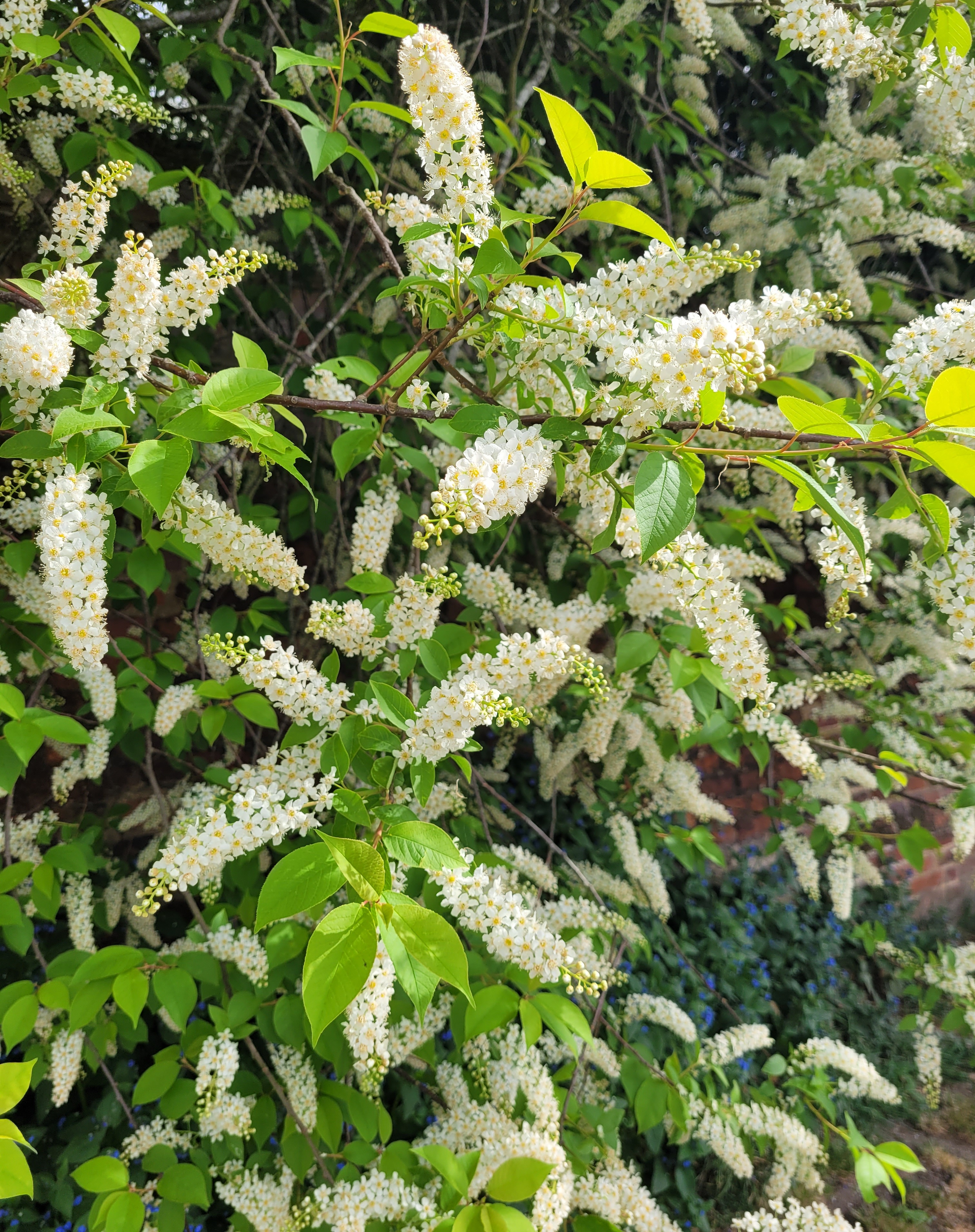
Flower Properties
| Property | Value |
|---|---|
| English Name | Bird Cherry |
| MainColor | White |
| PlantType |  Shrub Shrub |
| Growth Type |  Cultivated Cultivated |
| Season | May |
| ImageUrl | Prunus-007 |
| Photographer | DP |
| Location | Verulamium |
| Human Toxicity |  Mildly_Toxic Mildly_Toxic |
Flower Details
Description
Bird Cherry is a deciduous tree or large shrub reaching up to 15 metres in height. It has racemes of white flowers that bloom in spring, followed by small black cherries. The leaves are oval with finely serrated edges and turn yellow in autumn.
Distribution
Native to northern Europe and northern Asia, it is commonly found in woodlands, riverbanks, and hedgerows.
Medicinal/Other Uses

✅ Traditionally used in herbal medicine for its astringent properties and to treat respiratory ailments.
Edibility

Caution Advised - the cherries are astringent and mildly toxic if consumed in large quantities; they should be cooked before consumption.
Human Toxicity
Mildly Toxic - contains cyanogenic compounds that can release cyanide if consumed in large amounts.
Pet Toxicity

Highly Toxic to dogs - ingestion of leaves, seeds, or bark can lead to cyanide poisoning, causing symptoms like difficulty breathing and seizures.
Active Compounds
Prunasin, amygdalin, tannins.