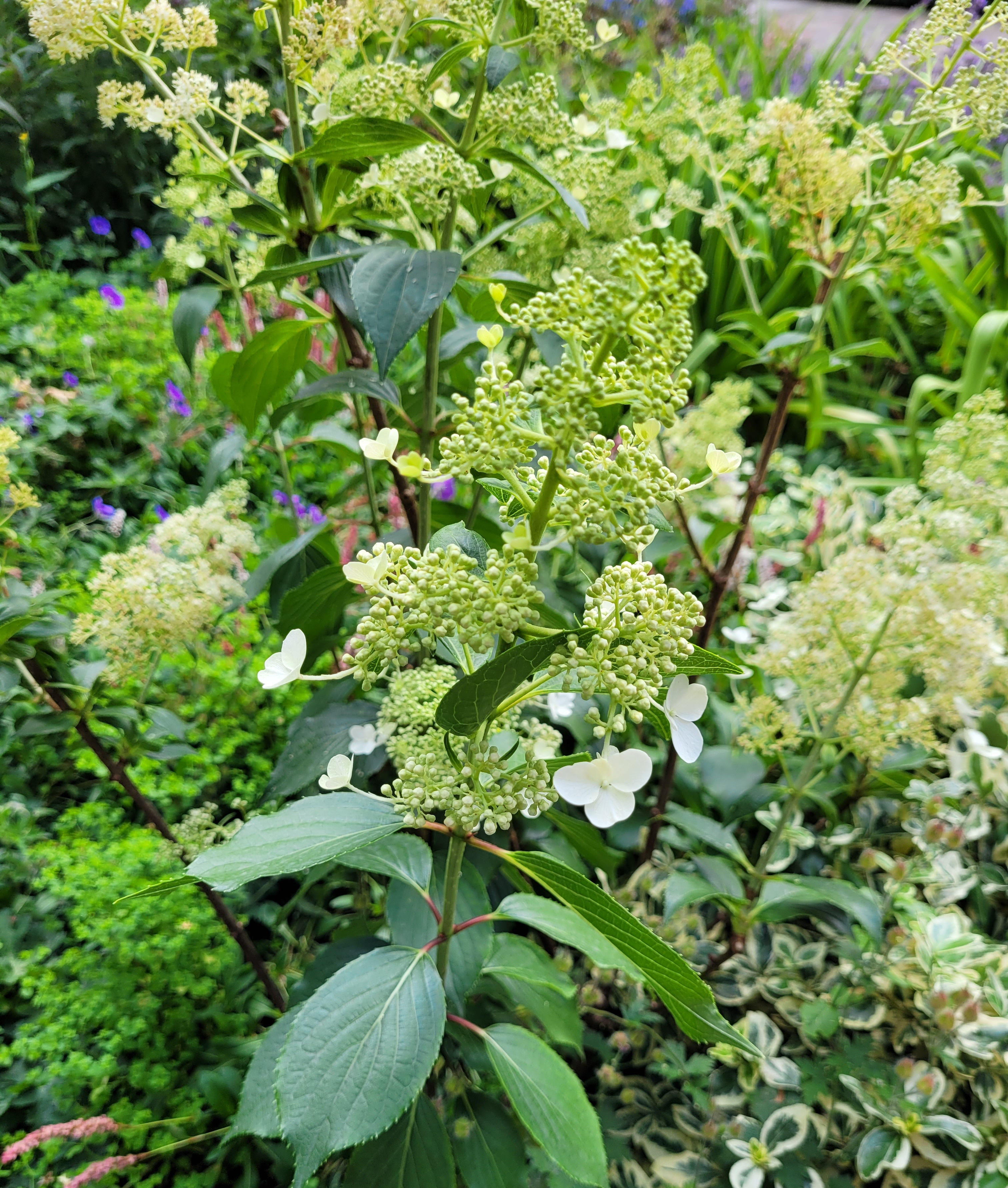
Flower Properties
| Property | Value |
|---|---|
| English Name | Panicle Hydrangea |
| MainColor | White |
| PlantType |  Shrub Shrub |
| Growth Type |  Cultivated Cultivated |
| Season | July |
| ImageUrl | Hydrangea-007 |
| Photographer | DP |
| Location | City of London |
| Human Toxicity |  Mildly_Toxic Mildly_Toxic |
Flower Details
Description
Panicle Hydrangea is a deciduous shrub known for its large, cone-shaped flower clusters that start white and often turn pink as they age. It can grow up to 6 metres tall and is popular in gardens for its late summer blooms. The leaves are oval, serrated, and dark green.
Distribution
Native to southern and eastern China, Korea, Japan, and Russia, it is widely cultivated in temperate regions worldwide.
Medicinal/Other Uses
— No significant medicinal uses.
Edibility
Inedible - all parts of the plant contain compounds that are not safe for consumption.
Human Toxicity
Mildly Toxic - ingestion can cause nausea, vomiting, and diarrhoea due to cyanogenic glycosides.
Pet Toxicity

Mildly Toxic to dogs and cats - ingestion may result in vomiting, lethargy, and diarrhoea.
Active Compounds
Hydrangin, saponins, cyanogenic glycosides.