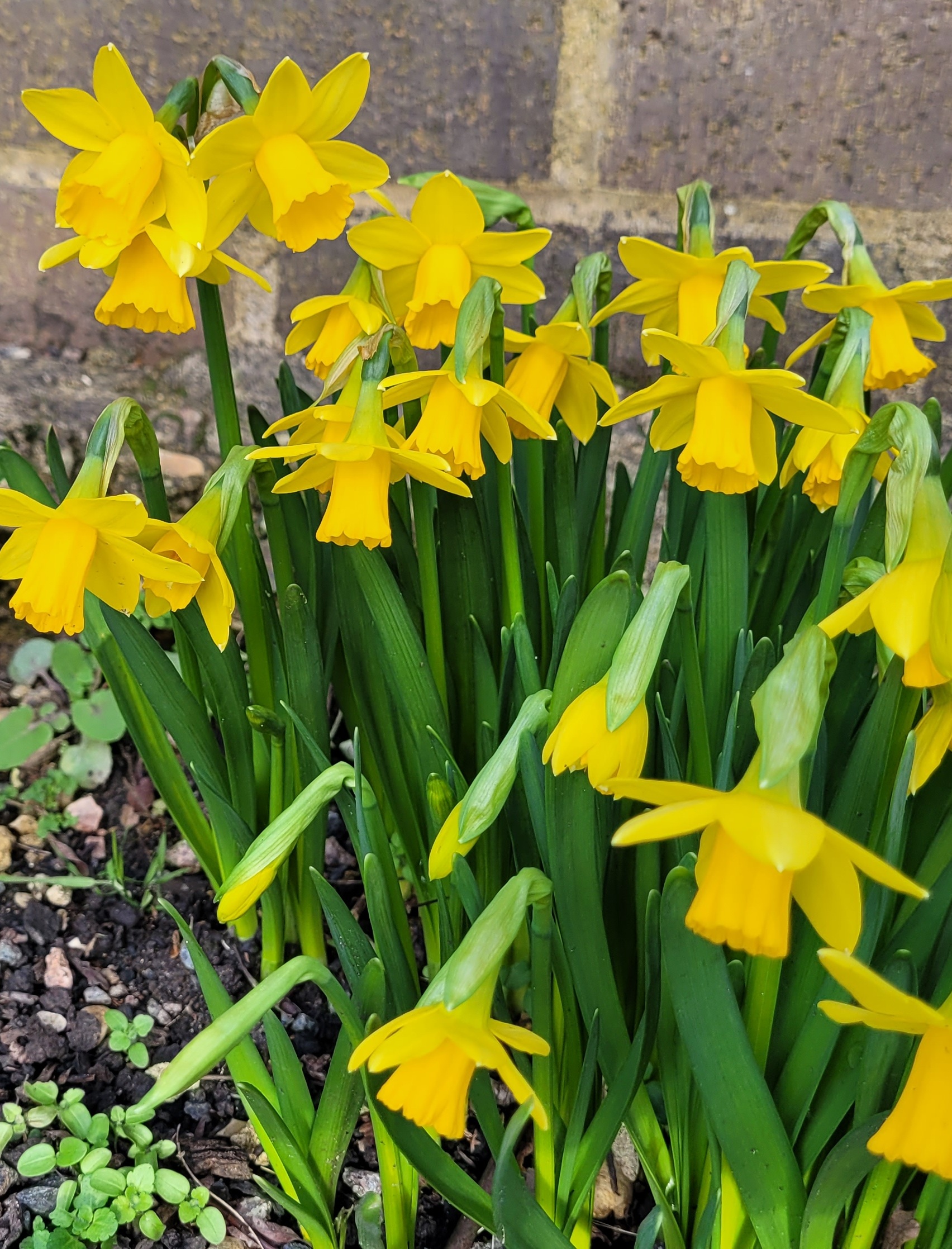
Flower Properties
| Property | Value |
|---|---|
| English Name | Daffodil |
| Scientific Name | Narcissus pseudonarcissus |
| MainColor | Yellow |
| PlantType |  Herb Herb |
| Distribution |  Cultivated Cultivated |
| Season Found | February (Feb - Apr) |
| ImageUrl | Narcissus-001 |
| Photographer | DP |
| Location Found | Abbots Langley |
| Country Found | UK |
| Last Updated | 06 September 2026 |
| Photo Quality | A |
Flower Details
Description
The Wild Daffodil is a perennial plant with pale yellow flowers and a central trumpet-shaped corona. It typically blooms in early spring and has long, narrow leaves. The flowers are often found in clusters and have a distinctive nodding appearance.
Distribution
This species is native to Western Europe, particularly in the UK, Spain, and Portugal. It thrives in meadows, woodlands, and along riverbanks.
Medicinal/Other Uses
— No significant medicinal uses.
Edibility
Inedible - all parts of the plant contain toxic compounds and should not be consumed.
Human Toxicity

Mildly_Toxic
Mildly Toxic - ingestion can cause nausea, vomiting, and diarrhoea. Skin contact may cause irritation.
Pet Toxicity

Highly Toxic to cats and dogs - ingestion can lead to vomiting, diarrhoea, and more severe symptoms such as convulsions and cardiac issues.
Active Compounds
Lycorine, galantamine, narciclasine.