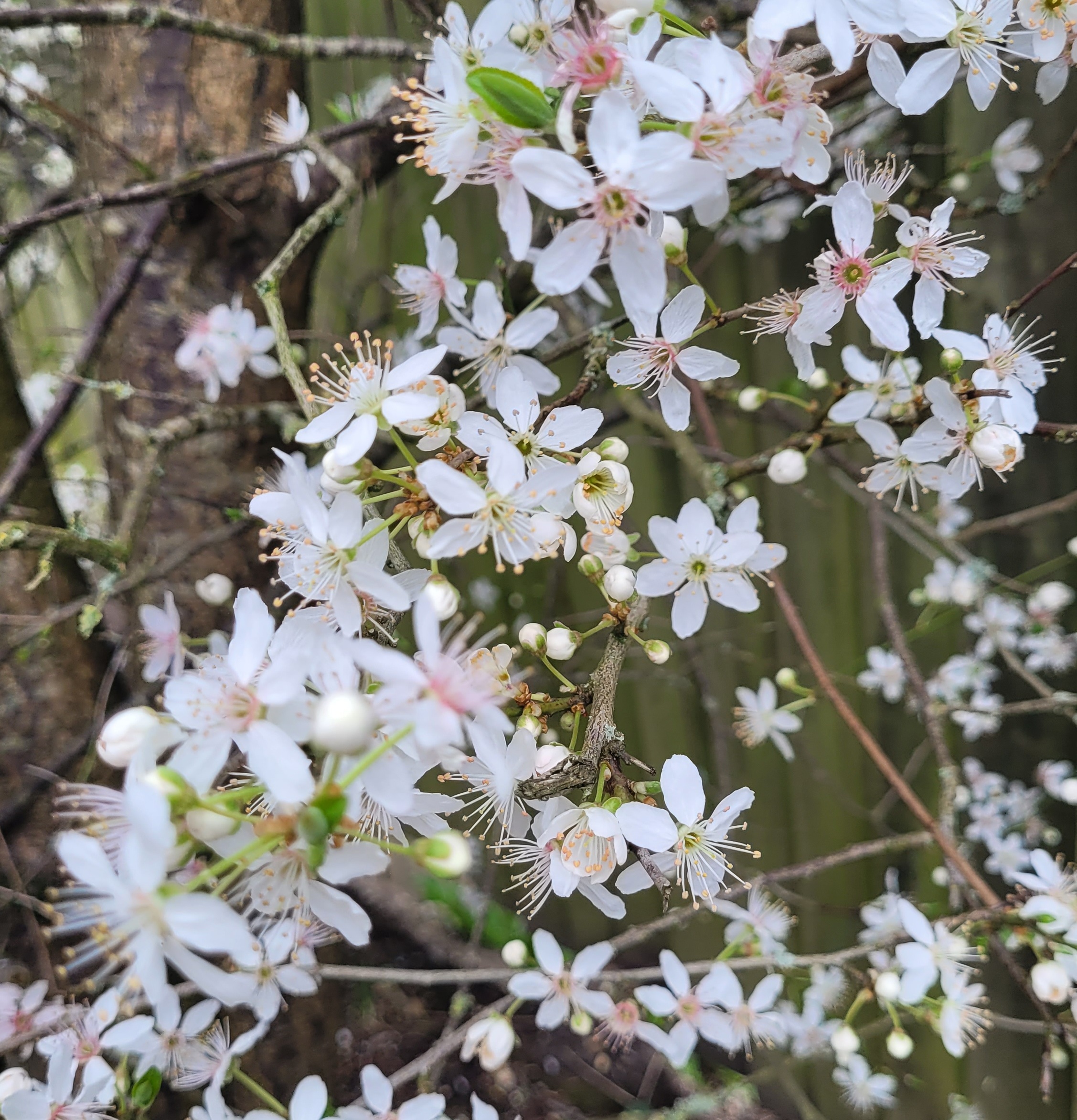
Flower Properties
| Property | Value |
|---|---|
| English Name | Cherry Plum |
| Scientific Name | Prunus cerasifera |
| MainColor | White |
| PlantType |  Tree Tree |
| Distribution |  Cultivated Cultivated |
| Season Found | March (Feb - Mar) |
| ImageUrl | Prunus-005 |
| Photographer | DP |
| Location Found | Abbots Langley |
| Country Found | UK |
| Last Updated | 06 September 2026 |
| Photo Quality | B |
Flower Details
Description
Cherry Plum is a small deciduous tree reaching up to 8 metres in height. It produces white or pale pink flowers in early spring, followed by small, round, red or yellow edible fruits. The leaves are ovate with serrated edges, and the bark is dark and smooth.
Distribution
Native to Southeast Europe and Western Asia, it is widely planted and naturalised in temperate regions worldwide.
Medicinal/Other Uses

✅ Cherry Plum is used in Bach flower remedies for its calming properties. It is also used as a rootstock for grafting other plum varieties.
Edibility

Edible - the fruits are sweet and can be eaten raw or used in jams and desserts.
Human Toxicity

Mildly_Toxic
Mildly Toxic - leaves and seeds contain cyanogenic compounds, which can release cyanide if ingested in large quantities.
Pet Toxicity

Highly Toxic to dogs and cats - ingestion of seeds or leaves can lead to cyanide poisoning.
Active Compounds
Cyanogenic glycosides, flavonoids, anthocyanins.