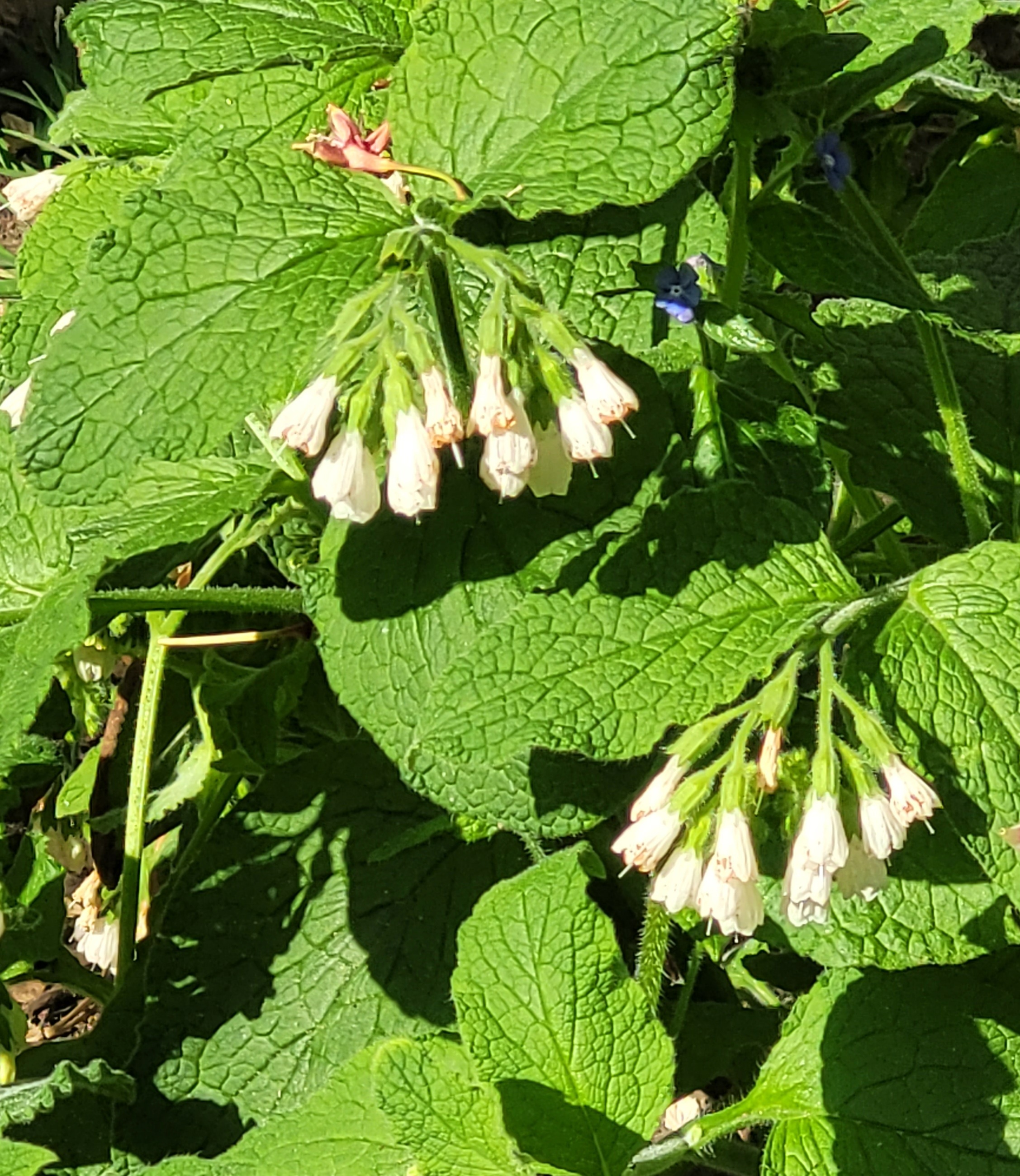
Flower Properties
| Property | Value |
|---|---|
| English Name | Common Comfrey |
| MainColor | White |
| PlantType |  Herb Herb |
| Growth Type |  Native Native |
| Season | April |
| ImageUrl | Symphytum-001 |
| Photographer | DP |
| Location | London |
| Human Toxicity |  Mildly_Toxic Mildly_Toxic |
Flower Details
Description
Common Comfrey is a perennial herb with large, hairy leaves and bell-shaped flowers that are typically purple, blue, or occasionally white. It thrives in damp, grassy places such as riverbanks and ditches.
Distribution
Native to Europe and parts of Asia, it is now naturalised in North America and other temperate regions.
Medicinal/Other Uses

✅ Traditionally used in herbal medicine for wound healing and reducing inflammation due to its allantoin content. However, internal use is discouraged due to potential toxicity.
Edibility
Caution Advised - Leaves and roots contain pyrrolizidine alkaloids which can be harmful if ingested in large quantities.
Human Toxicity
Mildly Toxic - Contains pyrrolizidine alkaloids which can cause liver damage if consumed in large amounts or over prolonged periods.
Pet Toxicity

Mildly Toxic to dogs and cats - Ingestion may lead to liver damage due to pyrrolizidine alkaloids.
Active Compounds
Allantoin, rosmarinic acid, pyrrolizidine alkaloids.