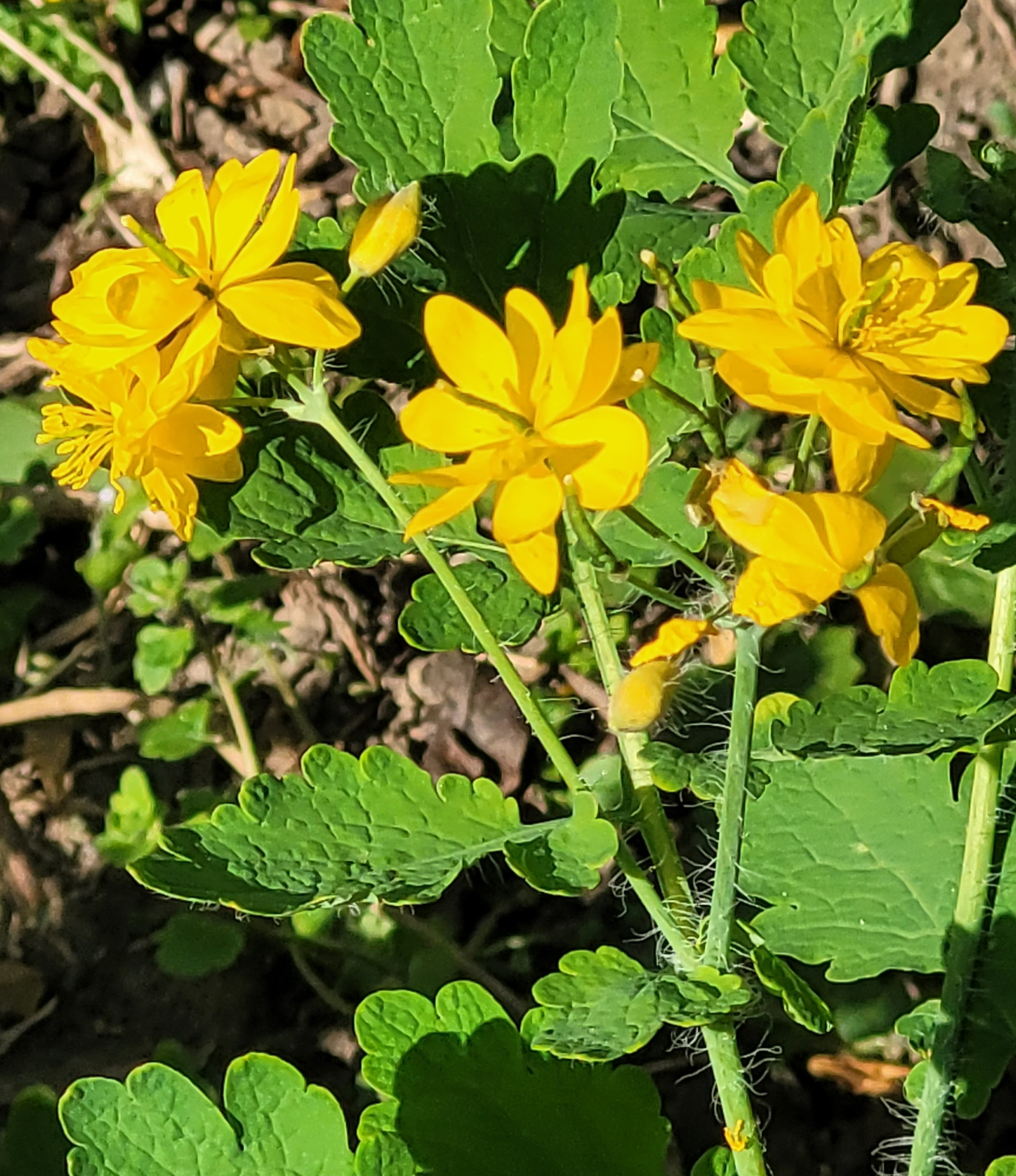
Flower Properties
| Property | Value |
|---|---|
| English Name | Greater Celandine |
| MainColor | Yellow |
| PlantType |  Herb Herb |
| Growth Type |  Native Native |
| Season | April |
| ImageUrl | Chelidonium-001 |
| Photographer | DP |
| Location | London |
| Human Toxicity |  Mildly_Toxic Mildly_Toxic |
Flower Details
Description
Greater Celandine is a perennial herb with bright yellow flowers and deeply lobed leaves. It produces an orange latex when its stems are broken. The plant can grow up to 1 metre in height and is often found in shaded, moist areas.
Distribution
Native to Europe and Western Asia, it has been introduced to North America and can be found in disturbed areas, gardens, and roadsides.
Medicinal/Other Uses

✅ Historically used in herbal medicine for treating warts and liver ailments. It has also been used in traditional remedies for its purported anti-inflammatory and antimicrobial properties.
Edibility
Caution Advised - contains toxic alkaloids and should not be consumed without proper preparation.
Human Toxicity
Mildly Toxic - can cause skin irritation and gastrointestinal distress if ingested.
Pet Toxicity

Mildly Toxic to dogs and cats - ingestion may lead to vomiting and diarrhoea.
Active Compounds
Chelidonine, sanguinarine, berberine