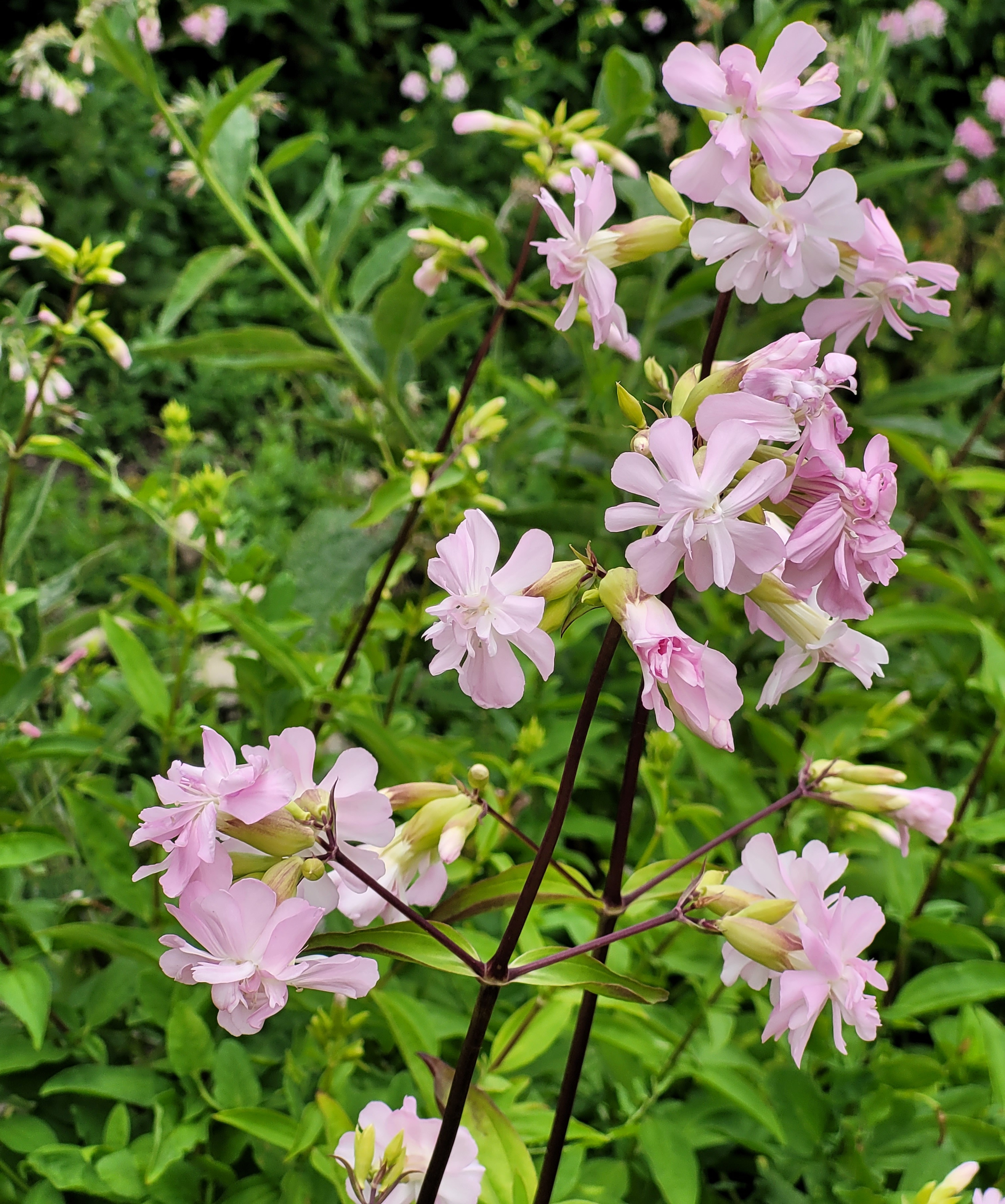
Flower Properties
| Property | Value |
|---|---|
| English Name | Common Soapwort |
| Scientific Name | Saponaria officinalis |
| MainColor | Pink |
| PlantType |  Herb Herb |
| Distribution |  Invasive Invasive |
| Season Found | September (Jul - Sep) |
| ImageUrl | Saponaria-002 |
| Photographer | DP |
| Location Found | Chorleywood |
| Country Found | UK |
| Last Updated | 04 September 2026 |
| Photo Quality | A |
Flower Details
Description
Soapwort is a perennial herb with clusters of pink to white flowers and lance-shaped leaves. It typically grows to about 30–90 cm in height and blooms from mid to late summer.
Distribution
Native to Europe and Asia, Soapwort is now widely naturalised in North America and other temperate regions. It thrives in well-drained soils and can often be found along roadsides and riverbanks.
Medicinal/Other Uses

✅ Historically used as a natural soap due to its saponin content, which creates a lather when mixed with water. It has also been used in traditional medicine for its expectorant properties.
Edibility
Caution Advised - contains saponins, which can be toxic if ingested in large quantities.
Human Toxicity

Mildly_Toxic
Mildly Toxic - ingestion of large amounts may cause nausea or diarrhoea due to saponin content.
Pet Toxicity

Mildly Toxic to dogs and cats - ingestion can lead to gastrointestinal upset.
Active Compounds
Saponins, flavonoids, phenolic acids.